
Stabilitas and Conversatio Morum – A Proposal on Redesigning the International Refugee System

The international refugee system is broken. One of the main reasons is that the Convention, drafted in 1951, defined a refugee for a known population, Europeans displaced before that year, and defined them well. In 1967, the world removed the date and the geography but did not change anything else. A text built for a specific historical moment was modified ad hoc to govern an open future. The resulting primary issue is that the condition from which people flee was never defined, and much of what is wrong with the system today runs through that gap.

Consider what the gap produces. Alienage is a required element of the definition and, therefore, a person is protected only if they reach a border. This criterion selects for the capacity to arrive: money for a smuggler, youth, stamina, a corridor. The people the Convention describes, the immobile, the poor, the elderly, mothers with children, the 69 million displaced inside their own countries, never enter any count of asylum seekers because the law defines them out. Meanwhile the arrival channel fills with people who need work and have no other door: adjudication takes years; rejection is not enforced, and the same Afghan can be protected in Sweden yet refused in Denmark because no single body has the authority to say what the words mean. The Convention, nominally international law, is in practice a shared text, not a shared law.

Now consider the financial cost. The rich world spends $60 to $90 billion a year on the arrival side: detaining, housing, adjudicating, and removing people who reached its territory. One American detention bed costs what it takes to protect 30 people in Jordan for a year. UNHCR, responsible for 118 million displaced, needed $10.6 billion in 2025 and had less than a quarter of it by midyear. Also, when its largest donor, the United States, withdrew most of its funding, it cut a third of its staff and capacity. A system in which one election removes a third of the institutional capacity is not a system.

Failing to fix the broken international refugee system has directly and indirectly contributed to a destabilized and disordered world. This proposal has four parts, and every one of them already exists somewhere in international law. What has not been done is to apply them to refugees.

First, define the condition. Persecution stays as it is: individual, adjudicated, generous on social group, a path to membership. But conflict, collapse and disaster become a declared condition, triggered by published data thresholds, district by district. Everyone from a declared district receives status without individual adjudication. The condition is reviewed on the data, ends when the data say it ends, and converts to permanent status after a defined period of time if it does not. This is what Europe did for more than 4 million Ukrainians from 2022 without the asylum system, and it worked.

The body that declares this condition would consist of a board and technical members. It would have no permanent seats, no veto, and no political vote on any individual finding. States sit on the board, which sets the thresholds for the conditions and the budget. The determinations about which districts have met them would be made by the technical members, appointed on fixed terms, applying published thresholds to published data, as the technical agencies of the international system already do. A declaration from the body triggers status, payments, and obligations automatically, with appeal to a court on points of law.

Second, pay for it by assessment. Every state contributes a fraction of a percent of national income, on the UN scale, with relief for poor states, a floor so everyone has standing, and a ceiling so no single contributor can cripple the fund by leaving. At 0.1% of world income the fund raises over $100 billion, roughly what is already being spent badly, and enough to protect 30 million people in first-asylum countries at a decent standard while funding the 2.5 million resettlement places that go unmet every year. For the United States, that comes to about $30 billion a year, roughly what it already spends on ICE alone. States that produce displacement pay a surcharge. For the first time, refugee law imposes a cost on the state that causes the flight.

And not only the state. Much of the world’s displacement is produced by cartels, militias and armed groups, and none of them has ever paid for it. When a condition is declared, the actors responsible are named where the evidence allows, and a named actor owes the fund the cost of protecting the people it drove out. Cartel wealth in cash or inside the origin state cannot be reached. However, cartel wealth in the financial system can, and nearly all of it passes through the financial system at some point.

A named actor is designated, and a bank that holds or moves a designated group’s money after that date is liable for three times the amount, without any need to prove intent, and its directors are personally barred after a second finding. Forfeited assets in American and European courts go to the fund instead of to police budgets. Arms dealers, chemical suppliers, lawyers and company-formation agents that serve a designated group are liable at the same rate. The people a cartel displaces should see the cartel’s money spent on them, and the bank that laundered it is the one counterparty that is solvent, licensed, and already required to know its customer.

Third, price the hosting. Today, a refugee’s location is decided by geography: whoever is next door, or wherever the boat lands, carries the cost, and everyone else sends what they feel like. The plan replaces that with a share and a price. Each year the total number of places the world needs is set and divided among states by formula: national income, population, land, and how many they have already taken. Germany’s share might be 400,000 places, Japan’s 250,000, Uganda’s 40,000. Each state then chooses. It can host its share, or it can pay the fund a fixed price for every place it does not host, roughly what it costs to protect someone properly in a first-asylum country, about $8,000 a year. Any state that hosts more than its share is paid that same price for every extra person. A state that pays its whole share has done what it owes, and most rich democracies would likely pay rather than host. Uganda, which already hosts nearly 2 million, is over its share by more than 1.9 million and would receive about $15 billion a year. No state is told whom to admit, only what it owes.

And if it does not pay? Refugee law has never had leverage of its own, so the plan borrows it. A state two years in arrears loses its vote, forfeits its good international standing, and accrues interest above its own borrowing cost. Beyond that, non-payment releases the other parties from the ordinary presumption of cooperation with the defaulter in everything else they do together: trade preferences, visa facilitation, shared security and technology arrangements, candidacies for multilateral posts. This is how states already discipline each other. The plan just makes the response lawful, coordinated, and expected. A Japan that pays is in good standing everywhere. A Japan that does not has given every other party a reason to look again at what else it is getting while not contributing to global governance and order.

Fourth, protect people where they are, and send them international support. Albert Hirschman showed that a person in a failing institution can exit or can stay and use voice, and every exit removes someone who might have pushed for change. Persecution-based asylum selects, by design, for the regime’s opponents. In other words, the system as it stands incentivizes the conversion of voice into exit. The only direct answer is a third option: protecting voice, meaning helping people reform their countries. This plan fields a service corps, and the rich world would pay its share in people as well as in money.

Each high-income state owes a number of people in service at any one time, proportional to its population, 2 per 10,000: about 66,000 Americans in the field, 25,000 Japanese, 17,000 Germans, some 200,000 in all, against a Peace Corps that today fields 3,300. There would be two tracks. 1. Professionals, such as doctors, lawyers, teachers, and engineers, on two to five-year terms with partial to full student loan forgiveness. 2. A service track for the young, with six months of training and eighteen in the field and the possibility of credits towards a bachelor’s degree. This could be an alternative to conscription or offer military-adjacent training without the physical requirements. No deployment runs more than 1 foreigner to 5 nationals. The work would get done by people who stay, and the foreigner’s function is skills, support, and witness.

The professional and service corps would be eyes and ears on the ground for the body that declares conditions. This would close the largest hole in a data-based system: a regime that blocks monitors to keep a district below the threshold. Inside adequately safe and accessible origin countries, the corps would work in place, and there would be a separate and small intake presence that facilitates applications so that protection can reach the people who cannot travel to a border. Most of the work, though, would not be inside origin countries. Two-thirds of the world’s refugees live in relatively safe host countries like Jordan, Uganda, Kenya and Colombia, where the risk is that of any development posting. There, the corps would work with the exiles themselves: schooling, training, documentation, and the institutions that keep them connected to home. The expectation from the start would be return. While the condition lasts, the exiles keep full rights, the ability to go home and come back, a vote in their own country’s elections where it holds them, and access to the institutions that keep them tied to their home country. When the body declares that the condition has ended, they would return as the origin country’s reserve rather than its loss. Where no outsider can enter and no citizen may lawfully leave, for example, North Korea, exit remains the whole of protection, and anyone who leaves such a state is presumptively a refugee. For participants, service in the corps could count as credited entry to the diplomatic service, to a military commission in the specialties that need languages, or to the civil and asylum services that make decisions about countries their staff have never seen.

None of this closes the border. The person who arrives still gets a decision, within 60 days, by an adjudicator using the same country findings everyone else uses, with one appeal and a lawyer. If the answer is yes, they stay. If it is no, they are returned to a place the body has said is safe, with notice, and never to a third country that has not been cleared. What ends is the wait, the shackles, and the flight to a country they have never heard of.

We can continue to pretend that the present framework works when it clearly does not, or we can change it. This is not about one administration’s failure. It is the failure of the international refugee system as it presently stands, and every part of the plan already exists somewhere in international law. The United States is already doing several parts of this plan, but alone, expensively, and in ways its own courts keep striking down. It is not doing the parts that would make it work and last. The framework would be implemented with other countries’ cooperation and done properly, and the same instincts animating the current political environment would produce a more stable system, updated to meet current realities and needs. This plan is designed to serve the original intent: provide stability and support for the displaced, without destabilizing the countries that host them, or draining the countries they left of the people who might rebuild them. Productive change can provide stability, but only if institutions actually act.

This essay was developed through an extended exchange with Claude, an AI model made by Anthropic. The framework, its central claims, and the editorial decisions are the author’s. Claude contributed drafting, sourcing, and critique. Figures are drawn from UNHCR’s Global Trends 2025, US and EU budget documents, and the sources listed in the citations. The author has not independently verified any figure, and readers should check the sources before relying on them.

Sources

Opening and diagnosis

  1. 1951 Convention definition; alienage; 1967 Protocol. Convention Relating to the Status of Refugees, 189 UNTS 137, Arts. 1A(2), 1B; Protocol Relating to the Status of Refugees, 606 UNTS 267, Art. I(2)–(3).
  2. Absence of an international interpreter; Art. 38 unused; Art. 35 supervisory role advisory. Convention Arts. 35, 38; Hathaway & Foster, The Law of Refugee Status (2nd ed. 2014), ch. 1; Goodwin-Gill & McAdam, The Refugee in International Law (4th ed. 2021), ch. 8.
  3. 68.7 million internally displaced; 117.8 million forcibly displaced (end 2025). UNHCR, Global Trends: Forced Displacement in 2025 (11 June 2026), unhcr.org/global-trends.
  4. Divergent recognition rates for Afghan claims across EU states. EUAA, Asylum Report (annual), recognition rates by citizenship and member state, 2018–2024 editions.
  5. Return decisions not enforced. Eurostat, migr_eirtn (return decisions and returns effected), roughly 20–25% executed; TRAC Immigration, EOIR removal-order data.
  6. $60–90 billion annual arrival-side spending. Estimate assembled from: ICE FY2026 budget (~$10.9B discretionary plus $74.85B mandatory over four years), DHS, ICE FY2026 Congressional Budget Justification; US immigration courts, USCIS asylum operations and municipal shelter costs (~$5–8B; NYC Office of Management and Budget, migrant-cost reports 2023–24); EU reception at €10–15k per applicant on ~1M annual applications (EUAA Asylum Report); German federal and state refugee-related spending (~€25–30B; Bundesministerium der Finanzen, Bericht über flüchtlingsbezogene Ausgaben); UK asylum accommodation (~£3B; Home Office, Annual Report and Accounts).
  7. One US detention bed-year versus protection in Jordan. Estimate: ~$220/day × 365 ≈ $80,000 (OpenImmigration, ICE Detention Statistics FY2026; National Immigration Forum, Immigration Detention Costs in a Time of Mass Deportation, Nov. 2025) against $2,000–3,000 per person-year at Jordan Compact standard (World Bank / UNHCR Jordan Compact reviews; UNHCR Jordan cash-assistance cost data).
  8. UNHCR 2025: $10.6 billion required; 23% funded at midyear; staff and capacity cut by a third; US historically ~$2 billion of ~$10 billion. UNRIC, Humanitarian aid: the most vulnerable already severely impacted by budget cuts (1 Sept. 2025); Al Jazeera, UN refugee agency warns funding cuts may leave 11 million without aid (18 July 2025); AEI, The UNHCR Responded to US Funding Cuts the Right Way (24 July 2026); Brussels Signal, UN Refugee Agency faces 3,500 job cuts (Sept. 2026).

First: define the condition

  1. Ukraine temporary protection, more than 4 million beneficiaries, activated 4 March 2022. Council Implementing Decision (EU) 2022/382; Eurostat, Temporary protection for persons fleeing Ukraine – monthly statistics (2026 releases).
  2. Undefined “indiscriminate violence” and “armed conflict” in EU law. CJEU, Elgafaji, C‑465/07 (2009); Diakité, C‑285/12 (2014).
  3. Data sources for thresholds. ACLED (Armed Conflict Location & Event Data); UCDP (Uppsala Conflict Data Program); IPC (Integrated Food Security Phase Classification); OCHA displacement tracking; IOM Displacement Tracking Matrix.
  4. Technical-determination model. IAEA Statute Art. XII; Chicago Convention on International Civil Aviation (1944), Arts. 37–38; WMO Convention. Abbott & Snidal, “Hard and Soft Law in International Governance,” International Organization 54 (2000).
  5. Treaty bodies created by their instruments. Convention against Torture, Art. 17; Rome Statute, Arts. 1, 34.

Second: assessment and liability

  1. UN scale of assessments: GNI base, low-per-capita-income adjustment, 0.001% floor, 22% ceiling. UNGA Res. 79/241 (2024) and predecessor resolutions; UN Committee on Contributions reports.
  2. World GDP ~$115 trillion. IMF, World Economic Outlook database, April 2026.
  3. US share at 0.1% of national income ≈ $30 billion; comparable to ICE’s effective annual budget. US gross national income ~$30 trillion, Bureau of Economic Analysis, GDP (Second Estimate) and Corporate Profits, 2nd Quarter 2026, BEA 26‑38 (26 Aug. 2026); IMF, World Economic Outlook, April 2026. ICE: ~$10.9B discretionary plus $74.85B mandatory over four years, DHS, ICE FY2026 Congressional Budget Justification; pro-rated annual total ~$30B.
  4. Assessed contributions in practice: peacekeeping budget $5.38 billion (2025–26); arrears ~$3.7 billion. UN News, $5.4 billion UN peacekeeping budget approved for 2025–2026 (30 June 2025); CRS, United Nations Issues: U.S. Funding to the UN System, IF10354; Security Council Report, UN Peacekeeping Operations: Closed Consultations (Nov. 2025).
  5. Resettlement need ~2.5 million for 2026; 81,800 resettled in 2025. UNHCR, Projected Global Resettlement Needs 2026; UNHCR, Global Trends 2025.
  6. Cartels and armed groups as displacement drivers. IDMC, Global Report on Internal Displacement (annual), Mexico, Central America, Haiti and DRC entries; UNHCR, Global Trends, Haiti and Mexico sections.
  7. Precedents for making producers of harm pay. UN Compensation Commission: UNSC Res. 687 (1991), para. 16; Res. 692 (1991). Colombia: Ley 975 de 2005 (Justice and Peace Law), Arts. 10, 44–45, 54; Ley 1448 de 2011.
  8. Cartel terrorist designations (2025). US Department of State, FTO designations of Sinaloa Cartel, CJNG and others, February 2025, Federal Register.
  9. Bank penalties under existing regimes. HSBC deferred prosecution agreement, S.D.N.Y., DOJ press release 11 Dec. 2012 ($1.9B); BNP Paribas plea agreement, S.D.N.Y., DOJ press release 30 June 2014 ($8.9B); TD Bank, DOJ/FinCEN, Oct. 2024 (~$3B).
  10. Non-conviction-based asset recovery. UK Criminal Finances Act 2017, ss. 1–2; Proceeds of Crime Act 2002, Part 5; Ireland Proceeds of Crime Act 1996.
  11. Forced displacement as a crime against humanity. Rome Statute, Art. 7(1)(d), 7(2)(d).
  12. Arms flows to cartels. GAO‑21‑322, Firearms Trafficking: U.S. Efforts to Disrupt Gun Smuggling into Mexico Would Benefit from Additional Data and Analysis (22 Feb. 2021; released 24 Mar. 2021).
  13. Gatekeeper professions and AML gaps. FATF, Mutual Evaluation Report: United States (2016) and follow-up reports.

Third: price the hosting

  1. Tradable refugee quotas. Peter H. Schuck, “Refugee Burden-Sharing: A Modest Proposal,” 22 Yale Journal of International Law 243 (1997).
  2. Uganda ~1.97 million refugees and asylum seekers hosted (end 2025); 2026 planning figure 2.2 million. UNHCR / Office of the Prime Minister, Uganda Country Refugee Response Plan 2026–2030; UNHCR Operational Data Portal, Uganda (updated 31 Aug. 2026).
  3. Japan’s refugee recognitions. Japan Immigration Services Agency, annual refugee recognition statistics.
  4. Share and price figures (Germany 400,000; Japan 250,000; Uganda 40,000; $8,000 per place; Uganda’s over-share payment). Illustrative; derived from a GNI, population and land formula applied to an annual place total of roughly 5 million at $8,000 per place. Not from a published allocation.
  5. ~70% of refugees hosted in low- and middle-income countries. UNHCR, Global Trends 2025, host-country section.
  6. Convention preamble on burden-sharing and international cooperation. 1951 Convention, Preamble, recitals 4–5.
  7. Article 19 vote suspension. UN Charter, Art. 19.
  8. Visa-code leverage against non-cooperating states. Regulation (EC) 810/2009, Art. 25a (as amended 2019); Council Implementing Decision on The Gambia (2021).
  9. Issue linkage in compliance. Robert O. Keohane, After Hegemony (1984), ch. 6; Downs, Rocke & Barsoom, “Is the Good News about Compliance Good News about Cooperation?” International Organization 50 (1996).

Fourth: support in place and the corps

  1. Exit and voice. Albert O. Hirschman, Exit, Voice, and Loyalty (1970); “Exit, Voice, and the Fate of the German Democratic Republic,” World Politics 45 (1993).
  2. Emigration and origin-country politics. Barsbai, Rapoport, Steinmayr & Trebesch, “The Effect of Labor Migration on the Diffusion of Democracy,” American Economic Journal: Applied Economics 9 (2017).
  3. Corps figures (US ~66,000; Japan ~25,000; Germany ~17,000; ~200,000 total). Derived: two per ten thousand of population, UN World Population Prospects 2024, high-income group.
  4. Peace Corps ~3,300 volunteers in the field (3,322 in FY2025). Congressional Research Service, The Peace Corps, IF12873 (updated 15 July 2026); Peace Corps, Agency Financial Report FY2025 (Dec. 2025).
  5. Protective accompaniment. Peace Brigades International, annual reports; Mahony & Eguren, Unarmed Bodyguards (1997).
  6. Two-thirds of refugees in first-asylum countries; Jordan, Uganda, Kenya, Colombia among largest hosts. UNHCR, Global Trends 2025.
  7. Credited-entry models for diplomatic service. Thomas R. Pickering Foreign Affairs Fellowship; Charles B. Rangel International Affairs Program, US Department of State.
  8. Closed-state exit presumption. North Korean Human Rights Act of 2004, Pub. L. 108‑333; Grundgesetz Art. 116 and Notaufnahmegesetz (1950) on GDR citizens.

The border

  1. Third-country removals: more than 25,000 people to 29 countries; agreements with some 35 states; Costa Rica arrangements; $7.5 million to Equatorial Guinea; transfers without notice. Krista Mahr, “In the New World Taking Shape, We’re All on Our Own,” The New York Times (Opinion), Sept. 2026, drawing on Refugees International and Human Rights First, third-country removals tracking (2025–26), and Costa Rican Dirección General de Migración y Extranjería statements. D.V.D. v. Department of Homeland Security, No. 26‑1212 (1st Cir. Sept. 18, 2026), affirming in principal part D.V.D. v. DHS, No. 25‑10676 (D. Mass. Feb. 2026), on notice and fear-of-destination procedures; emergency application to the Supreme Court pending (Sept. 2026). Costa Rica, Sala Constitucional, ruling on CATEM detention conditions (2025).
  2. Sixty-day adjudication achievable. Swiss Asylum Act (AsylG) accelerated procedure (2019 reform), State Secretariat for Migration statistics; Netherlands IND track system; Regulation (EU) 2024/1348 (Asylum Procedure Regulation), Arts. 42–43.

Necessary Changes to the Law

6/20/23 – Grass lawns should be banned. They are really bad for the environment. They consume loads of water and require a lot of fertilizer and pesticides, which pollute our water sources, plants and wildlife. There are many great options for ground cover that are drought-tolerant, low-maintenance and pollinator-friendly. Either we get serious about protecting the environment, or we resign ourselves to extinction. These are the only two options.

3/18/23 – Credit card companies must be required to give a minimum 28-day grace period, the time between your statement’s closing date and your required minimum payment. Why? Because most people get paid biweekly, and it allows them to better manage their bill payments. We want a bill with just this one change to the law, which is popular with all Americans, and we want all lawmakers on the record as to where they stand, one easy to understand vote at a time. We want transparency and accountability. Do you work for the American people or for the banks?

Russia’s War in Ukraine Is a War Against God and Identity

Ukrainian Identity
Maria Prymachenko – A Dove Has Spread Her Wings and Asks for Peace

Today, on the one-year anniversary of Russia’s attempted genocide of the Ukrainian people and the elimination of their land, their culture and their heritage, let us reflect on how deeply connected their fight is to our own and much of the world’s struggles. There is no doubt that Russian aggression is partially motivated by empire and economics. The satanic Russian s—t, also known as putin, wants the land that does not belong to him and the economic potential it holds. He also wants to burnish his name as one of the world’s great tyrants, like his idol the equally satanic Stalin, who “returns Russia to its former greatness.”

It’s all a myth, a depraved idea of leadership and legacy. What is not a myth, however, what is a harsh reality is Ukraine’s genuine struggle for survival. It is an existential battle but also more than that. It’s about an ancient people and culture retaining its distinctive features, its own character. It’s not about just surviving. It’s about being, in their case, being Ukrainian.

Identity in the United States

In the United States, we have also been fighting for and about identity. Our internal battles are not really about the evil one, trump, or his mini-me, DeSantis, or Republican or Democrat. There is of course an aspect of our divisions that is about power and economics because these are staple features of politics. More fundamentally, however, it’s about who is American and what it means to be American. It’s about being American.

It was not mere chance that during the evil one, trump’s, era we saw Muslim-Americans, Mexican-Americans, African-Americans and others asserting their rightful claims as American. (Please continue to do so. It’s a simple but important act of resistance.) For a time, time like the lifespan of a fruit fly in the long context of human history, being American meant being white. As we can now see with the passing of a few centuries, or is it mere decades, this was all a myth. It was what white people told themselves on stolen land so that they wouldn’t feel like the thieves they actually were.

Before the white colonists, there were people living on this land that we now call the United States of America and on this continent called North America. Note that both the country and the continents, North and South, are named after an Italian explorer, Amerigo Vespucci, from the city-state of Florence. Italy was so fragmented during the Renaissance period that it did not exist as a country, leave alone, the once vast Roman Empire. Instead, “Italians” of this time fiercely identified with and defended their respective city-states.

We call the people original to both continents, North and South America, native/indigenous people as if they were a monolithic group. In reality, they were groups of people who had their own distinct characteristics. They had their own languages and cultures, but we obscure their rich diversity because we are focused on distinguishing them as a group from the stark contrast of the white invaders but also because their distinctiveness has been treated as unimportant by the dominant white colonialists, who viewed them as inferior and sometimes didn’t even view them as fully human.

The Nature of Identity

At its core, identity isn’t about power or money. It isn’t actually about this world. Identity is about how we reflect the gift of freedom and independence that God granted us to the world. When another person or another country tries to subdue our distinctiveness, we instinctually want to defend it because it is our birthright as children of God. Even if we don’t understand this consciously, we understand it subconsciously. To destroy identity is to make slaves of God’s free people, and it is an act of war against God.

Identity in India

In India, the horrific Hindu caste system is the institutionalized slavery of human beings that has lasted, by reasonable estimations, at least two millennia. The caste system, like all systems of slavery, modern and ancient, is an act of war against God and identity. Like Americans and others, Indians have been preoccupied with their own battle for identity. Many white people assume that everyone wants to be white since, at least subconsciously, they often think of themselves as superior. The irony is that, in the land of colorism, although Indians often want to be “fair,” (exactly what shade of light brown is that, could someone please specify?), they don’t want to be white. However, the reason doesn’t really have much to do with skin color and everything to do with identity.

Indians want to have indisputable claim to Indian soil. A fierce battle has been raging since what should have been an esoteric academic paper became fodder for political propaganda by Hindutva. The academic researchers presented genetic evidence for the migration of the people from the Steppe region into India, which supported the established linguistic research that described a similar migration. This scientific evidence, however, posed an inconvenient truth to the Hindutva who want to claim that Hinduism and their genetic lineage are native to the land of India.

It is more difficult to argue that to be Indian is to be Hindu if Hinduism isn’t original to the ancient Indus Valley civilization, which was contemporaneous with the ancient Egyptian and Babylonian civilizations, that had existed in India prior to the invasion by the foreigners of the Steppe. The satanic modi, much like other dictators and wannabee dictators around the world, did what they all do when faced with such inconvenient truths. He lied. They all try to rewrite history in their own image. However, it is just another myth, in this case, one that rewrites Indian history, lineage and identity to favor the dominant Hindu religion and maintain its institutionalized slavery, the caste system.  

Slavery Strips Identity

Slavery is to take a human being, who has an inherent value in God’s eyes and was made free by God, and to render the person nothing but an object stripped of agency to be used and disposed of as the oppressor chooses. Kevin Bales’s classic book on modern slavery is called “Disposable People.” People who are treated as disposable, whether indigenous, African, Indian, Ukrainian or other European, are not treated as people any longer. Let us not forget that slavery, in its myriad of forms, has plagued the European continent and Europeans, as it has every corner of the globe, since human beings have existed. Their white skin does not exempt from becoming enslaved, which is exactly what the evil ones, trump and putin, want to do,

The War on Ukrainian Identity Is Genocide

Russian terrorism is intended to subjugate the Ukrainian people, to eliminate them as a distinct group of people who have forged their own culture with their God-given uniqueness, and to force them to become slaves to their Russian masters. It is meant to erase their identity just as slavery in the United States erased the identities of the people brought from Africa. Terrorism is a barbaric method intended not just to sow fear to subdue resistance, but to use fear to force human beings to surrender the self and to extinguish their divine spark. Russia’s war in Ukraine is an act of war against God and Ukrainian identity.

Let us lay bare the truth of the age we’re living in. It is a period of fierce fighting over identity, yet, simultaneously, complete confusion about the nature of identity. It is a period of brutality cloaked in the soft modern language of politics. To seek empire, although discouraged by the international post-war order, can be contextualized as part of the perennially problematic quest for global domination, for power and money. To seek the erasure of a group’s identity, that is genocide, however, is abhorrent to our modern sensibilities, as it should be if we are to live as children of God. Let us not deceive ourselves. The latter is what the despots seek, in Ukraine, in India, in the United States and elsewhere. They are all engaging in an act of war against God and identity, and the world needs to act aggressively and decisively to eliminate them before they eliminate us.

The End of the United States of America

United States of America

These words might be jarring, but that is the state of the disunion: a steady dissolution of the United States of America that is leading to its end in its present form – its democratic form. Some might think this is an alarmist assessment. I would suggest to those skeptics that they are not paying attention and that they make unwarranted assumptions about the resilience of the country’s democracy, its institutions and its norms.

Until relatively recently, the United States of America’s national identity had been centered around one concept – democracy. With the rise of the evil one (aka the former guy), half the country, obviously, the Republicans have abandoned democracy in its stated form in our founding documents. This is well-documented, and links are provided below for edification. The purpose of this essay is to assert the unalienable rights of the other half of the country, the Democrats.

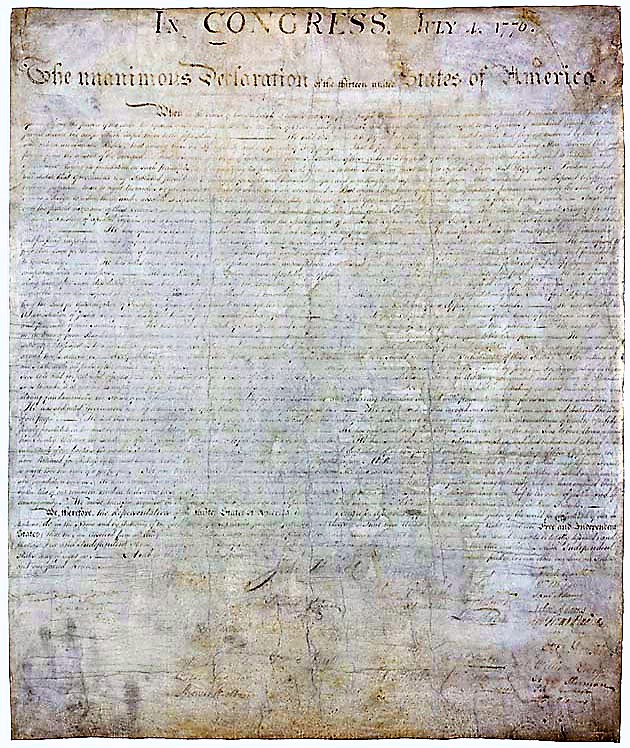
The opening of the Declaration of Independence, which was adopted on July 4, 1776 and whose original draft was written by Thomas Jefferson, is as follows:

When in the Course of human events, it becomes necessary for one people to dissolve the political bands which have connected them with another, and to assume among the powers of the earth, the separate and equal station to which the Laws of Nature and of Nature’s God entitle them, a decent respect to the opinions of mankind requires that they should declare the causes which impel them to the separation.

We hold these truths to be self-evident, that all men are created equal, that they are endowed by their Creator with certain unalienable Rights, that among these are Life, Liberty and the pursuit of Happiness.–That to secure these rights, Governments are instituted among Men, deriving their just powers from the consent of the governed, –That whenever any Form of Government becomes destructive of these ends, it is the Right of the People to alter or to abolish it, and to institute new Government, laying its foundation on such principles and organizing its powers in such form, as to them shall seem most likely to effect their Safety and Happiness.

The Declaration of Independence is the nation’s covenant, and the Republicans are breaking it. For this reason alone, the Democrats are entirely justified in asserting the following: “That whenever any Form of Government becomes destructive of these ends, it is the Right of the People to alter or to abolish it, and to institute new Government.”

In other words, the Declaration of Independence gives Democrats the right to invoke the dissolution of the union if the form of government forced upon them violates these self-evident truths: “that all men are created equal, that they are endowed by their Creator with certain unalienable Rights, that among these are Life, Liberty and the pursuit of Happiness.”

An authoritarian form of government is clearly in violation of these self-evident truths and is the antithesis of democracy, yet this is the form of government that the Republicans are pursuing and effectively imposing or trying to impose upon the other half of the country, the Democrats. What shall the remedy be? The Declaration of Independence continues as follows:

Prudence, indeed, will dictate that Governments long established should not be changed for light and transient causes; and accordingly all experience hath shewn, that mankind are more disposed to suffer, while evils are sufferable, than to right themselves by abolishing the forms to which they are accustomed. But when a long train of abuses and usurpations, pursuing invariably the same Object evinces a design to reduce them under absolute Despotism, it is their right, it is their duty, to throw off such Government, and to provide new Guards for their future security.–Such has been the patient sufferance of these Colonies; and such is now the necessity which constrains them to alter their former Systems of Government.

It is the right, in fact, it is the duty of Democrats to throw off such a government for which a “long train of abuses and usurpations, pursuing invariably the same Object evinces a design to reduce them under absolute Despotism.” In keeping with the spirit of our preeminent founding document, a decent respect for prevailing powers compels an explanation of such abuses and usurpations.

Premier among said abuses and usurpations is a violation directly related to the legacy of slavery and to the greatest truth held within the document: “all men are created equal.” A document restrained in its references to divinity made an exception in this regard and for good reason. Our equality in our creation is asserted by God himself. No matter which god one worships, the assertion that all human beings are created equal does not invoke an earthly order. Instead, it is divinely ordained and thus irrevocable.

The Democrats, the most diverse of the country’s citizens, are not being treated according to this clearly stated recognition of our God-given equality. Instead, we are treated as second-class citizens. For those who find this language hyperbolic, I present as evidence the structure of the government itself. It, particularly the Electoral College and the Senate, is designed to perpetuate minority rule. Let us not delude ourselves into thinking that this entirely undemocratic structure was for some noble reason. It was not. It was to placate former slaveholding colonies, whose participation in the revolution against the British was necessary, and it came at the expense of the integrity of the union as a whole.

It is without question that the stated ideal in the Declaration of Independence that “all men are created equal” was compromised in the Constitution, to which there have been numerous amendments, in part, to correct this foundational wrong. As is well-documented, the corruption of this ideal among others was mainly to appease slaveholding colonies who held a depraved understanding of humanity. It was not a view of mankind based on facts or science but on a self-delusion of racial superiority and on all manner of barbarity in the pursuit of money and power. It is now better understood as our original sin. Indeed, reminiscent of Adam and Eve’s fall from grace, this original sin still stains every aspect of our society.

The United States of America’s Electorate

How shall we understand the current polarized electorate? It is more accurately understood as the derivation of a bifurcation along more or less the same fault lines that marred the inception of the nation. I also argue that it is best understood in terms similar to the Civil War era leader of a Republican Party that no longer exists, Abraham Lincoln’s realization in a moment of divine inspiration as a battle of good and evil. If this characterization sounds too antiquated or religious to modern ears, I suggest that you tune your ears to the truth because the truth will set you free.

The hard truth for white Americans is that if they are more interested in preserving and protecting their whiteness and their positions of privilege than in preserving and protecting our democracy, then they are more aligned with white supremacists and violence, which is evil, than with democracy and peace, which is good. No matter what other policies are being debated, often ad nauseum, this is the only choice on the ballot that actually matters: democracy or autocracy.

The moral clarity of right and wrong, good and evil that Lincoln found was neither easily achieved nor easily pursued. He did so nonetheless; he prevailed, and he ended the institution of slavery. Following God’s call often comes at a personal price. This was the case for Lincoln and for many other white abolitionists, such as Elijah Lovejoy and John Brown. If white Americans are unwilling to sacrifice, not their lives but simply their (often ill-begotten) comfort and wealth, then please do not present yourselves to an enlightened, diverse society as anything but the modern manifestation of antebellum white oppressors.

Republican “leadership” often in the appeasement of their rabid and radicalized base but also in self-serving pursuits of the most vulgar variety, such as personal enrichment, and at the expense of our democracy would do well to remember certain truths about the other half. The Democrats, who they are alienating at best to outright vilifying, are the country’s brains and its purse. This statement is verifiable. Republicans would also do well to remember that, despite decades of decadence and indiscipline, Americans, particularly Democrats, are collectively some of the toughest people in the world.

America is a nation of immigrants. Recent immigrants, in particular, have often risked everything, including their lives, to come to this country. Descendants of former slaves and indigenous people know well past and present cruelties. Drawing upon their collective memories and experiences, they can call on a trial-tested fortitude to defend against new oppressors. Even those Democrats who have been softened by years of inherited wealth will likely be able to rekindle the noble spirit of their ancestors to fight on behalf of the nation’s eternal ideals and against the tyranny of despotism.

Unlike many other countries, often ancient civilizations that are both enriched and encumbered by the past, the United States of America is a relatively new nation. It is also an idealistic one that continues to believe in itself and, in spite of the flawed execution of its ideals as contained in the Constitution, is accustomed to a certain respect for the inherent dignities of its people. A people like these should not to be underestimated and should not be tested.   

The imposition of the evil one, a person who is entirely unfit for any political office or position of authority, on the Democrats will lead to an irreparable fissure. Democrats will not accept it, and the nation will be torn asunder into two parts: democratic and autocratic. The warning is as follows: the Republican Party allows or enables the evil one to become its presidential candidate at the country’s and the democracy’s peril.

The pro-democracy half of the country, the Democrats will fight to protect the rights and the freedoms that are our birthright and for the full recognition of these rights and freedoms and of our humanity as stated in the Declaration of Independence: “all men are created equal.” As our Founding Fathers did, we will submit our facts to a candid world, and we will throw off the despots that aim to subvert our will and oppress us.

https://www.nytimes.com/2022/01/03/opinion/us-democracy-constitution.html

https://www.theatlantic.com/magazine/archive/2022/01/january-6-insurrection-trump-coup-2024-election/620843/

https://www.motherjones.com/media/2021/12/war-on-democracy-media/

Paradise Lost, Party Found

Paradise
Luca Iaconelli on Unsplash

At the gym, I was subjected to a music video called “Paradise.” It starts with two fully clothed men riding their bikes while two bikini-clad women strike pornographic poses on a beach. It ends with Chris Brown singing, “See you on the other side,” while surrounded by scantily-clad women raising their glasses and dancing at a full-blown beach party. Paradise lost; party found.

I don’t know what has happened or is happening to this country, but it’s lost its way. The right has weaponized the majority religion, Christianity, while appealing to more “conservative” factions of other religions and libertarians, to hold onto power, money and white privilege. The left has weaponized hatred of religion, mainly Christianity, while appealing to more “liberal” factions of other religions and libertarians to gain power, money and to further place themselves in positions of privilege. Both extremes are disgusting and dangerous.

I have held a reverence for and have unwaveringly pursued a truly intellectual and artistic life since I was a teenager. My life is my bona fides, and it is incontestable. Given who I am and how I have lived, the left’s trajectory has repulsed me. It has divorced itself from anything resembling the search for truth, which is my life’s commitment. Instead, it is simply in pursuit of itself and the imposition of itself on a society that is struggling to define who it is and what it believes.

Although I have always been a Christian, I have not always been a deeply religious person, but I have also never harbored any hatred for Christianity or for any other religion. Instead, I have always been fascinated by religions. I have read various religious texts, artistically engaged with diverse religious art and visited many places of worship.

I would view any other approach as a betrayal of my objectivity, which is absolutely necessary in the pursuit of truth. These religions have also added a critical spiritual dimension to my intellectual and artistic pursuits that gave them depth. Without my spiritual journeys, my understanding of the human experience and of truth would be incomplete and superficial.

The left has become a grotesque caricature of an “enlightened” person. It has replaced genuine curiosity and the often endless and frustrating search for truth with no search at all. It is not trying to find paradise. It is not questioning if we have lost paradise. It is not even genuinely questioning if an otherworldly paradise exists. It is just a party that wants to party. It is shallow, stupid and self-centered.

It has easy answers for hard questions, which effectively means that it has no answers at all. The left has also engaged in various forms of revisionism that are basically lies it conveniently peddles to support its narrative and its agenda. It has become the opposite extreme of everything it claims to hate on the right, so much so that there is, in fact, a considerable overlap between extreme right and left.

Let me put this as succinctly as I can. Both of these extremes are an intellectual and artistic failure. The left, which considers itself “enlightened,” actually has nothing meaningful to offer to either an individual who is genuinely seeking a deeper understanding of him or herself or to our society as we navigate a period of considerable change and uncertainty.

Power and Professionalism

Power differentials as an integral part of an institution’s structure are not as common as people might assume. In some respects, power differentials are pervasive, such as in employment situations. Most people have a boss, and he or she does have power over his or her employees. However, a boss’s power is relatively limited in scope. If abused, typically, the worst that can happen is losing the job and the associated finances. Also, there is usually a human resources department or some type of accountability mechanism in place to prevent or deal with abuses of power, however moderately effective they might be.

Conversely, teaching at the post-secondary level has almost no checks on a professor’s power, and yet, it is, by and large, a remarkably ethical profession. Professors have considerable latitude in the structure of their courses, in their policies, and in their application of them, and the grades they assign remain on their students’ transcripts for the rest of their lives.

This level of professionalism in academia is particularly striking since most professors do not get any training in teaching, aside from teaching assistantships, which are not necessarily required, or even in ethics. Granted, it usually takes a minimum of a decade of full-time study to earn a doctorate degree, which is its own form of training. Nonetheless, the ethical standard is unspoken yet implicitly understood by all professors – treat your students fairly.

As an aside, it is this consistent level of professionalism that led to the medical profession, which has been plagued by various ethical scandals, most recently, its role in the nation’s opioid epidemic, adopting the academic title of “doctor.” It is and will always be an academic title. Even though the ultimate culpability lies with the police officers, it should also be noted that the opioid epidemic, fueled by the medical and the pharmaceutical industries, was a contributing yet overlooked factor in the murder of George Floyd.

A key aspect to treating all students fairly is having a clear policy in place and applying it uniformly. In considering any one student’s request, the question to ask is: given the student’s situation and the policy, would granting the student’s request be fair to the student and to the rest of the class? One needs to consider both the student making the request and the other students in the class.

It is also understood that no matter how the student might have treated the professor or the professor’s personal feelings regarding the student, his or her grade must be based strictly on his or her performance in the class. Needless to say, the student’s performance in any other class or any other behavioral issues cannot factor into the professor’s assessment of the student’s performance or the professor’s treatment of the student, which always needs to be mature, professional, and proportional.  

Law enforcement does not share academia’s reputation for professionalism, and its implicitly understood guidelines do not seem to be followed, despite the explicit training for police officers, but they should be. Equal treatment is the cardinal rule that must be observed when power differentials exist, particularly as part of an institutional structure.

There is a clear power differential between the police and the people they are called to serve and protect. Police brutality is fundamentally an abuse of power. Instead of the equal treatment that is simply taken for granted in academia, in policing, there are often clear biases and reactions that are grossly disproportionate to the offense. Also, as we have seen sadly too many times, unlike in the academic context, a police officer’s abuse of power can be deadly for the victim.

This article suggests that Derek Chauvin’s defense argues that fear was a motiving factor for his conduct. I would argue that the correct expectation is the academic standard and that the police’s feelings, no matter what they are including fear, should never be a factor. Police officers are to completely separate their emotions from the execution of their duties.

Instead, we see that particularly for Derek Chauvin, but also for J. Alexander Kueng, Thomas Lane and Tou Thao, their emotions governed their every action and that from the very beginning of their interaction with George Floyd and his companions, the police were completely out of control of themselves and of the situation. Within minutes of approaching the parked car George Floyd was sitting in, responding to nothing but the alleged use of a counterfeit $20 bill, a police officer pulled his gun and aimed it at Floyd.

How could this reaction possibly be equal treatment? It was not. It was prejudicial treatment, based on Floyd’s appearance, who was a big, black man. His prior record, if even known to the police at the time, was completely irrelevant to the potential petty offense they were called to resolve. It was emotional and egotistical. It was about their assertion of their power. It was about forcing someone, who is made in the image of God and granted by him with free will, to submit to their will.

It was uncontrolled. Floyd’s altered state of mind was equally irrelevant to the potential offense. If anything, his state placed more burden on the police officers to act in a controlled and calm manner instead of what we saw, which was the opposite. Their reaction was also grossly disproportionate to the potential offense. It was unprofessional, and, unfortunately, it was deadly. It was none of the things one would expect of a professional police response, and it resulted in the police murdering George Floyd.

Police culture needs to change. There needs to be the expectation for police officers that with great power comes great responsibility. As in academia, the onus is on the person with the power to always be in control of him or herself and to use that power judiciously and fairly. If one cannot do this, the person should simply not become a police officer. If one does not do this and abuses one’s power, as in this case, the person should be punished to the fullest extent of the law.

White Culture Is No Culture

Culture

Without ethnic minority groups, the United States would have no culture because white Christian culture by itself is no culture. Given its various characteristics, such as location, population, economics, etc., the Midwest is a good region to analyze to better understand the country as a whole.

The midwestern states are: Illinois, Indiana, Iowa, Kansas, Michigan, Minnesota, Missouri, Nebraska, North Dakota, Ohio, South Dakota, and Wisconsin. The Midwest can be divided into two subregions: the Northwest Territory (also known as the Old Northwest) and the Great Plains. States in the Northwest Territory are Indiana, Illinois, Michigan, Ohio, and Wisconsin, and the rest, Iowa, Kansas, Minnesota, Missouri, Nebraska, North Dakota, and South Dakota, belong to the Great Plains.

Based on the July 2017 census, the largest city in the entire Midwest is Chicago, Illinois, which unsurprisingly also has the largest metropolitan area. Given its sheer size and diversity, Chicago is more similar to New York City or Los Angeles than other midwestern cities. It is also part of the Northwest Territory.

Minneapolis Culture

Outside of Chicago, arguably no other midwestern city boasts a truly vibrant culture aside from Minneapolis, Minnesota. It ranks eighth among the largest cities and third for the largest metropolitan area. Minneapolis is actually one of the two “Twin Cities,” with Saint Paul being the other city, which ranks twelfth.

Minneapolis has grown and changed dramatically in its recent history, and it now ranks among the most cultured cities in the country. Where does this culture come from? The answer is that it does not come from white Christians. It comes from its ethnic minorities.

Food Culture

Without its ethnic minority groups, again the people who are not white Christians, the city of Minneapolis and its inhabitants would still be eating lefsa and lutefisk, not that there is anything wrong with them as cultural legacy, but there is just not much demand for the rather crude culinary offerings.

Neither is there much culinary sophistication in “hotdish,” also known as casserole, hotdogs and burgers, the last two being originally German fare. They are all now standard American fare, but they so ubiquitous that they, by themselves, cannot create a culinary culture.

Eat Street, which runs along Nicollet Avenue, starting just outside its downtown district, is one of the most well-known streets in Minneapolis for food. It hosts a variety of restaurants but is dominated by Asian ones.

The restaurants are supported by farmers markets and a growing farm-to-table movement, giving minority groups, such as the Hmong, a way to maintain their traditional livelihoods. (Obviously, many restaurants in the city have come under financial pressure due to the shutdown in response to the pandemic.)

Nelson (2019) writes, “Restaurants have always been on the front lines of the melting pot in this country. Twin Cities diners can circumnavigate the globe several times over and never leave the seven-county metro area. Culinary traditions spanning every continent — Indonesia to India, Morocco to Mexico, Somalia to Singapore — are represented here in restaurants and markets, a breadth and depth unimaginable 20 years ago.”

Long Live the Arts

However, food alone does not a culture make. There are many cities in diverse parts of the country, for example Southern California, with well-developed food cultures that still lack a strong overall culture. Also, many Americans mistake entertainment for culture. Sports are entertainment. They are not a key contributor to a city’s culture.

The arts and a vibrant arts community are absolutely critical to creating an authentic local culture. The Minneapolis arts scene thrives in all forms: fine arts, theater, music, dance, local activities and festivals, often using its well-maintained public parks and lakes, which are also an investment, as its venues. It is not just about art for art’s sake but art for the sake of having a living city, a city that has a sense of cultural purpose, not just a city in which one lives.

Minneapolis Music Culture – Bob Dylan and Prince

The two most famous people to come out of the state are Bob Dylan and Prince. Bob Dylan, originally named Robert Allen Zimmerman, was born to a Jewish family in Duluth, MN and raised in Hibbing, MN. He later moved to Minneapolis to study at the University of Minnesota. After dropping out of college, he moved to New York City, where he started and made his musical career. As an aside, Bob Dylan was inspired by Woody Guthrie, whose life and music should be reflected upon more, particularly as it relates to class, race relations and equality.  

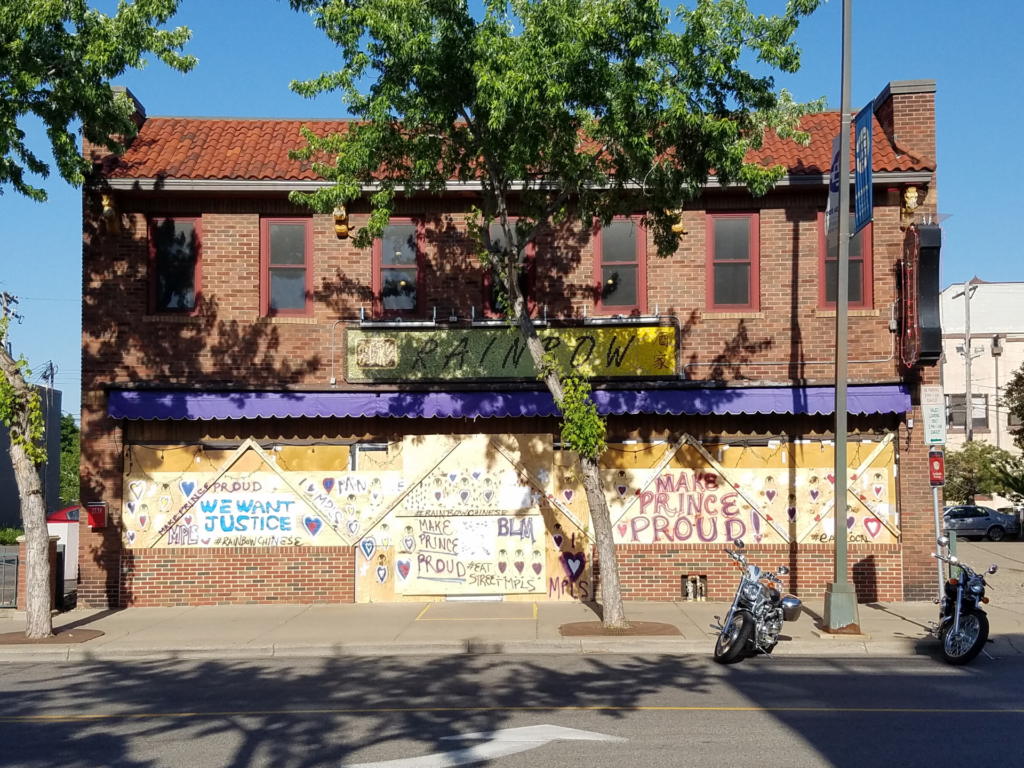
Prince was born Prince Rogers Nelson in Minneapolis. He rose to stardom on sheer tenacity, savvy and talent, as a racist music industry once refused to allow him and other black musicians, such as arguably the most famous musician in the world at the time, Michael Jackson, to air their music videos on MTV. Prince’s exploitation by said music industry led him to change his name from his birth name to a symbol (a combination of male and female symbols) in 1993 until he changed it back in 2000.

Unlike Dylan, who left Minneapolis, Prince maintained his residence in the city, technically the suburb of Chanhassen, where his home and studio, Paisley Park are located. He hosted parties there, and he would sometimes show up at them or other music events in the city. He loved Minneapolis, and the city loved him. His untimely passing in 2016 at the age of 57 was one of the city’s great heartbreaks.

It is poetic justice that the city’s and state’s proudest native sons are a black man and a Jewish man, respectively. As the racist-tweeting, Eric Metaxas even somewhat concedes, Martin Luther, for his justified opposition to the corrupt Catholic Church was unjustifiably opposed to the people who actually gave us Christianity.

Given the large Lutheran population in Minnesota, it is sadly unsurprising that Minneapolis was once known as the “capitol of anti-Semitism,” and the city has also had a history of discrimination against its black residents, particularly related to housing. Dylan’s song Desolation Row starts by referring to the lynching of black men at the hands of depraved white people in Duluth, Minnesota.  

Update: Their murder occurred 100 years ago today, June 15, 2020. A message from Gov. Walz: “To truly be One Minnesota, we need to dismantle the systems of oppression that led to the deaths of Clayton, Jackson, and McGhie 100 years ago, and that led to the death of George Floyd just 3 weeks ago. Today I met with Duluth leaders to discuss how we can and will move forward.” On June 12, 2020, “the Governor [had] issued the state’s first posthumous pardon to Max Mason, who was wrongfully convicted and used as a scapegoat for the lynching.”

American Culture Is Color and Cool

Bazelon (2018) wrote, “Being white in America has long been treated, at least by white people, as too familiar to be of much interest. It’s been the default identity, the cultural wallpaper — something described, when described at all, using bland metaphors like milk and vanilla and codes like ‘cornfed’ and ‘all-American.'”

Another way of describing it is actually no culture, the absence of anything that gives life dimension, and frankly, some sense of cool. White people need to get over themselves and their “white fragility,” which as Waldman (2018) writes, DiAngelo argues in her book “holds racism in place,” because frankly, my dear, I don’t give a damn and accept the fact that the collective minority groups bring coolness and culture to the country. They can justifiably throw their stake into American soil and claim its culture to be their own because it is.

We Are Releasing Evil’s Death Grip

Death Grip

George Floyd was murdered by the Minneapolis Police on Memorial Day, May 25, 2020, a national holiday dedicated to mourning our military personnel who have died while serving our country. Surrounded by death from Covid 19, his singular death, on a day marked to pay our respects to prior deaths, seemed to paradoxically release the death grip on our country, as we threw ourselves into resurrecting it and rejecting evil.

This paradox was alluded to on our first brief post, “The specter of death now looms over the world as nature enters a period of rebirth. It might seem paradoxical, until one considers that it is also Lent, and life, death and rebirth have been married together in that context for approximately 2,000 years.”

Our nation’s rebirth has also overlapped with Pentecost Sunday, which was May 31, 2020, a day when the Holy Spirit descended on the Apostles and gave them the fortitude, comfort and aid that they would need to spread the truth and the faith.

We are apostles of a different sort, as we take our demands for justice, our messages of love, peace, equality, of everything good and holy to a country that has been darkened by power, greed, corruption, betrayal and all manner of sin, in short, to a country that has fallen prey to the forces of evil.

Today, June 6, 2020 is the 76th anniversary of D-Day, when Allied forces stormed the beaches of Normandy, France in Operation Overlord during World War II. It is a day when the forces of good staged a pivotal battle in their war against the forces of evil, a day when Allied forces started to release the Nazi’s death grip on Europe, and anti-fascists faced down fascists and eventually won the war.   

For Americans, the past almost two weeks, starting May 26, 2020, when many of us first found out about George Floyd’s murder, have been some of the most emotionally taxing days in our memory. His murder was the catalyst for the outpouring of anger, frustration and sadness that had been building for many of us for years about the gross injustices our black sisters and brothers face on a daily basis.

As Wortham wrote in an essay titled, A Glorious Poetic Rage, “Rashad Robinson, the president of the civil rights organization Color of Change, speculated that it was the stark cruelty of the video of George Floyd’s death that captivated the country.”

The poetry of the moment is part of the country’s collective poetic anthology. Many on the right have tried to frame the present protests as unpatriotic or un-American, as an assault on “law and order,” but their characterizations could not be further from the truth. They are lies, and they are liars.

Following in the footsteps of honorable generations upon generations of Americans who have fought to defend our country, our protests are our psalms of communal lament for and our songs of love to our nation. They are our latest expressions of patriotism, and we are our country’s present defenders.

Let us not minimize the critical nature of this moment. We are the defenders of good, and we are in a battle against evil. We are fighting to unclench the fist that has been squeezing the breath and life out of our country and its people. (See this post for context.)

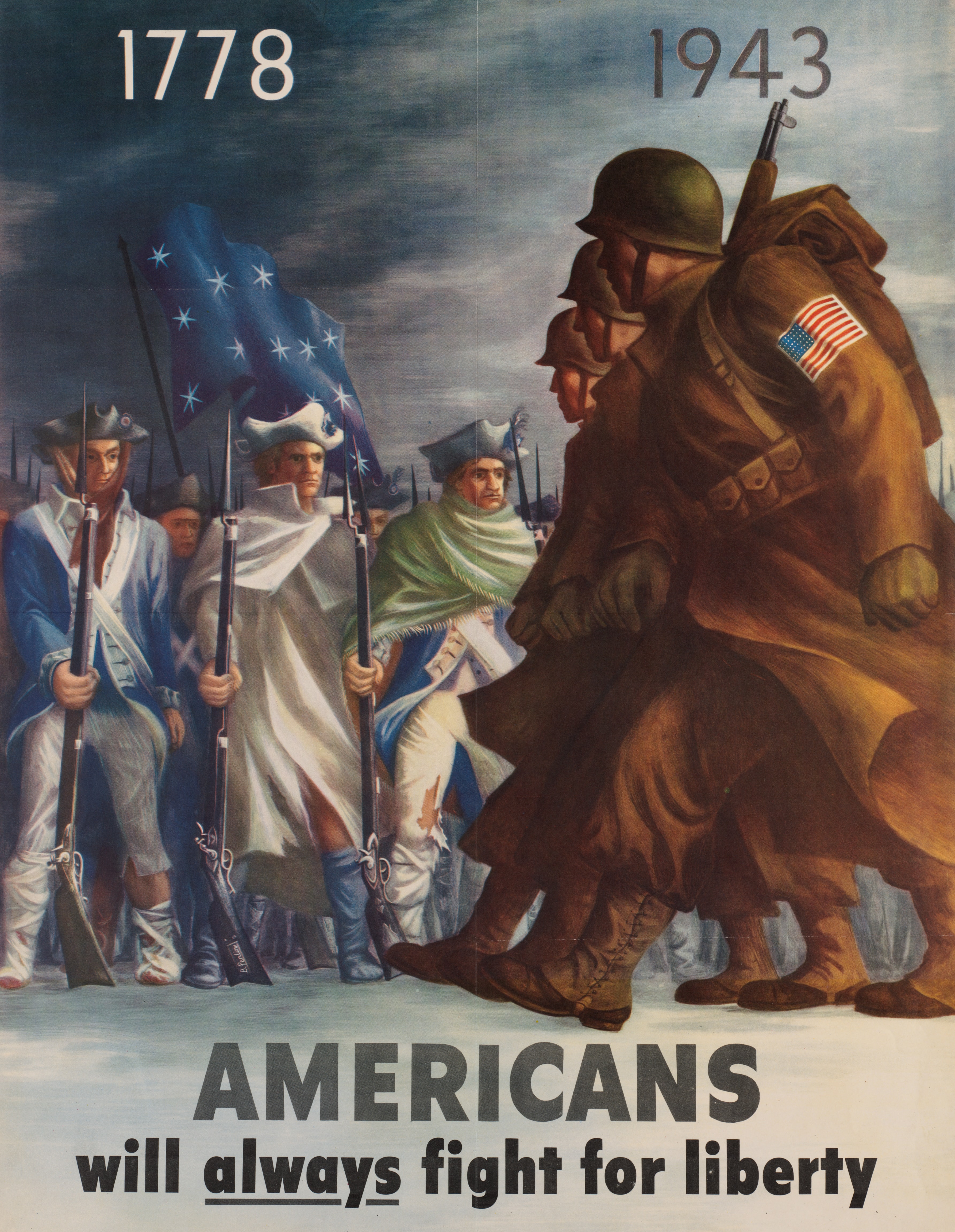
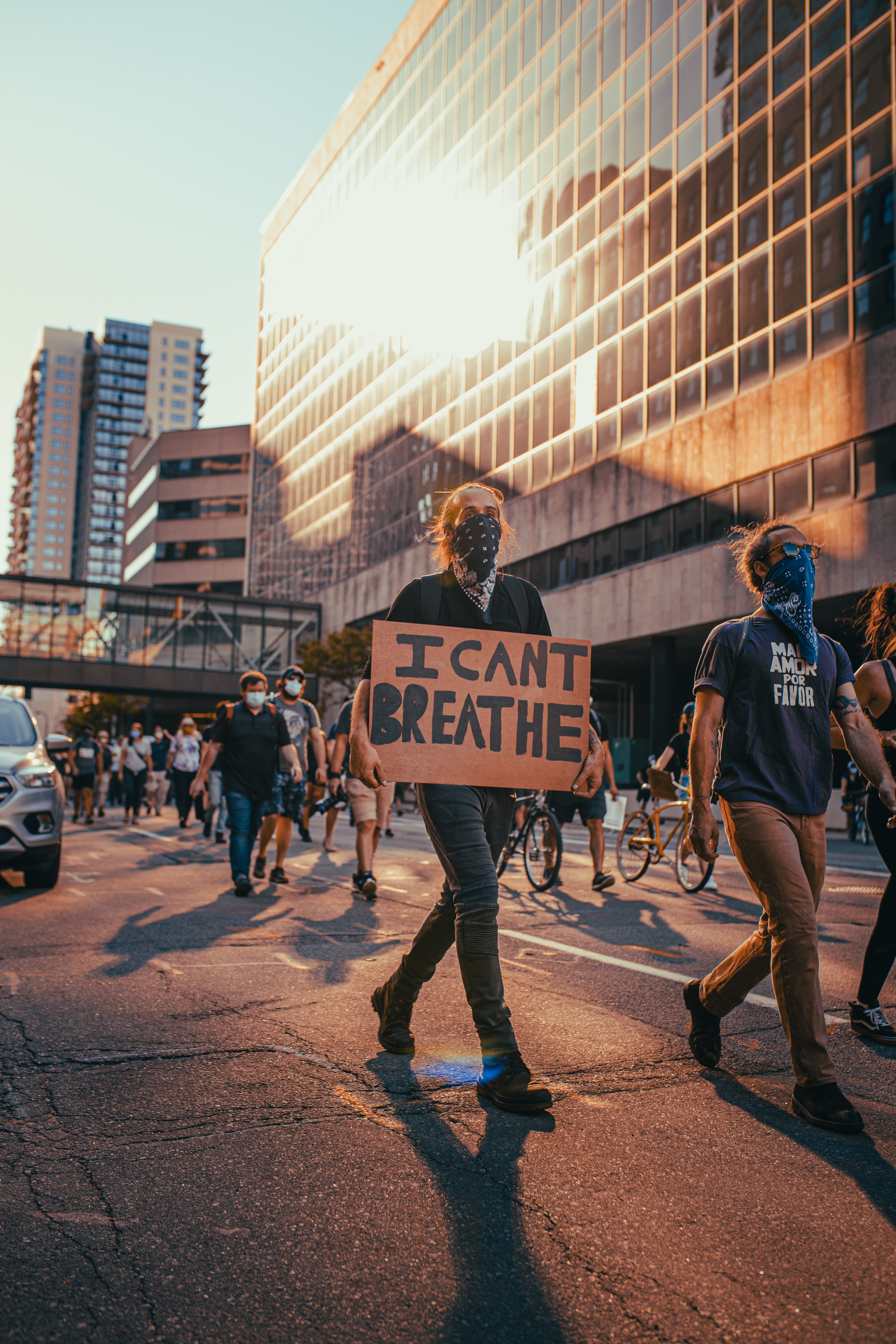
Just as our country’s citizens change, the poetic language of our citizens change. “Give Me Liberty or Give Me Death,” “Americans Will Always Fight for Liberty,” have taken on a more personal tone, as our cries repeat the final words of the victims of state-sanctioned violence, “I Can’t Breathe,” “Hands Up, Don’t Shoot,” to the simple assertion of black Americans’ humanity, a statement that had once been (and perhaps still is) the subject of controversy, “Black Lives Matter.”

Good Against Evil’s Death Grip

As in World War II, Americans are in a life and death battle against the forces of evil. Our lives are literally at stake, as is our democracy. We need to do everything we can to protect it from tyranny and fascism. Let us speak directly of this evil. As we spoke all of the names of the victims of police violence, let us speak the name of this evil that is destroying our country.

The devil does not just reside across an ocean, in a foreign country, speaking in a foreign tongue, but, our dear Americans, it lives in the people’s house. It has taken hold of our sacred national spaces and tried to force upon our country’s capital its death grip under the guise of relatively innocuous-sounding phrases, such as “flood the zone.”

Hiding in a bunker within the White House, fortified with fences upon fences, this evil man turned the country’s military, which is meant to protect us against our foreign enemies, against its own citizens, sometimes supplemented with unidentified men in heavily-armed riot gear.

These various armed forces have been attacking and harming peaceful protesters. In one case, this evil man did so to desecrate a sacred Christian house of worship while brandishing the Bible, which he never reads. This evil is trying to impose a fascist death grip on our nation’s capital and on our country.

This evil inhabits a soulless man named Donald J. Trump. Conway writes, “As a New Yorker profile of Trump put it nearly a quarter-century ago, Trump lives ‘an existence unmolested by the rumbling of a soul.’ That’s Donald Trump’s problem yesterday, today and tomorrow.”

It is his eternal problem because as a child of darkness, he seems incapable of emitting one ounce of light. Instead, like a black hole, Trump functions by sucking everything into the demonic, empty, narcissistic shell of his person.

Trump’s Death Grip and His Satanic Cults

Let us not fool ourselves into thinking that the devil walks alone. He is accompanied by secular sycophants and religious mercenaries who have sold their professed “Christian” faith for their own personal ambitions.

In particularly, many white evangelicals stopped being about anything resembling Jesus. Instead of making themselves more like Jesus, they made Jesus more like themselves. Some of them have given themselves fully over to the dark side. QAnon is a satanic cult that is pretending to be Christian nationalists, which are a form of evil themselves.

However, the problem is not limited to just white evangelicals. Within the Catholic Church, which has had numerous engagements with the unholy while holding high its mantle of holiness, there are abettors of this evil. Most recently, the devil in the Catholic Church takes on the form of a petty man with gloriously meaningless turns of phrases that he recently weaved into a public display of idolization for a false god, Donald Trump.

Against these forces of evil, we are an army of good. We have each other, which is really all we need. We will prevail. We will save our country and ourselves from this present death grip so that it can breathe and so that we can truly live free. As Patrick Henry declared, so do we, “Give us liberty or give us death” because “Black Lives Matter.” We rise and fall together. E pluribus unum.

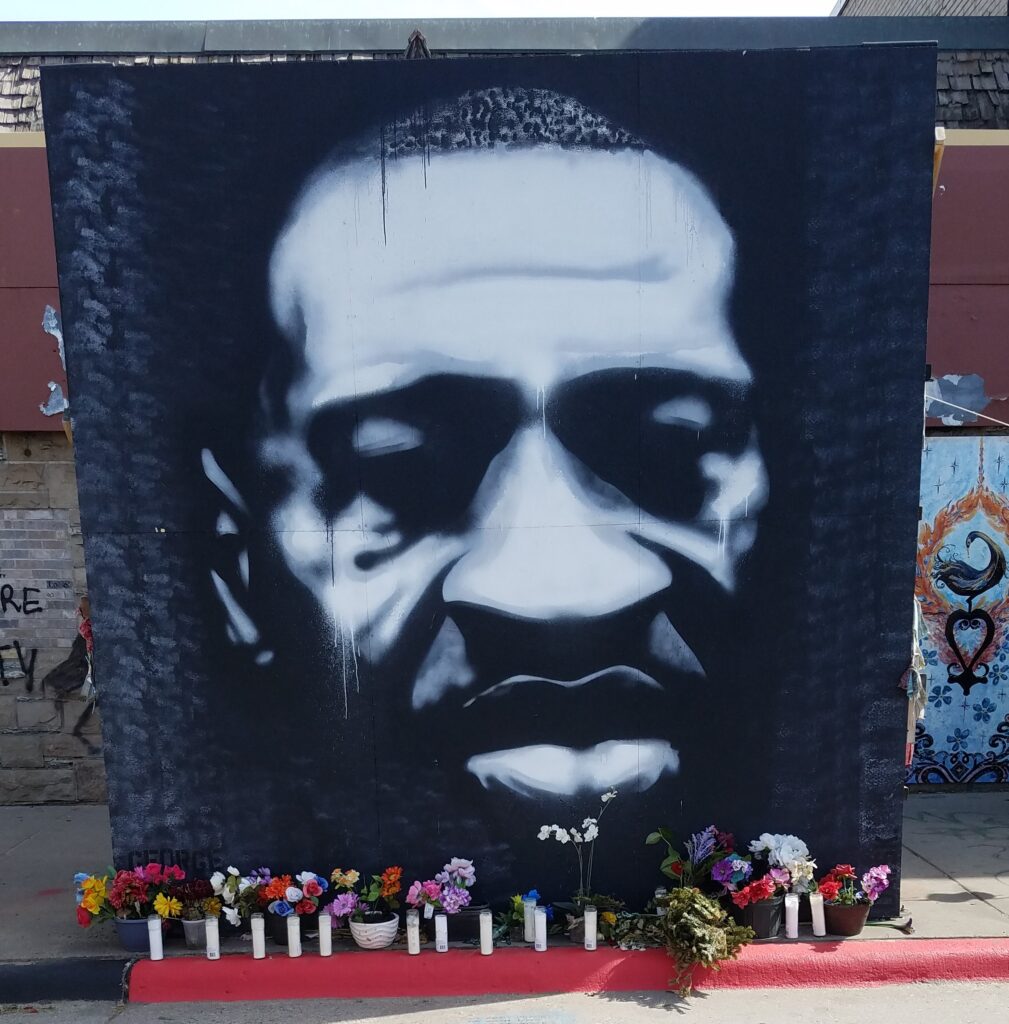
George Floyd – Murdered by the Minneapolis Police

George Floyd
Josh Hild on Usplash

Minnesota calls itself the Land of 10,000 Lakes, and Minneapolis was known for its harsh winters and its good quality of life, including its well-maintained parks and lakes. Now, it is known as the city in which George Floyd, a 46-year-old black man, was cruelly murdered by the Minneapolis police, the men and women in whom we entrust with the great privilege and responsibility of protecting and serving our communities.

The Events Resulting in George Floyd’s Murder

The purported reason for George Floyd’s arrest was a suspected $20 white-collar crime, a fraudulent payment. The real reason was the color of his skin. Thanks to Darnella Frazier, whose account Twitter suspended for an unknown reason, we have the true story, the video of George Floyd’s death, instead of the deceptive story provided in the police report. We thank Darnella, who is only 17-years-old, for her courage, conscience and presence of mind to record it. She was traumatized by the experience, and we pray for her.

George Floyd died with an officer pressing his knee against his neck for over 9 minutes. Floyd’s tortured face pressed into the asphalt, he pled with the officer(s), speaking words that brought back the memory of Eric Garner, “I can’t breathe.” “I can’t breathe,” Floyd says; “I can’t breathe.” He calls out for his mother, “mama,” he says. He urinated on himself. (The graphic video can be found on the Internet.)

There were numerous witnesses. Their panicked concern was palpable, and they begged the officer(s) to release him, to take his knee of the visibly distressed man. The officers did not. You can hear the officers joking as George Floyd is dying. Floyd’s body slowly becomes lifeless, and when the medics came, he no longer had a pulse. He was dead. (A timeline of the events is provided here. )

This is how an American citizen, our brother, a broken man (as we all are) of faith, a human being, a child of God, died. He was treated like an animal, like his life had no value, like his person had no dignity. This is how the men we gave the privilege and responsibility of protecting and serving our communities treated one of our own. They heartlessly murdered George Floyd, and we are angry; we are traumatized; we are heartbroken, and we are fed up. We want peace, justice and revolution – not just change – but a complete transformation of our society.

Our Country Is Broken

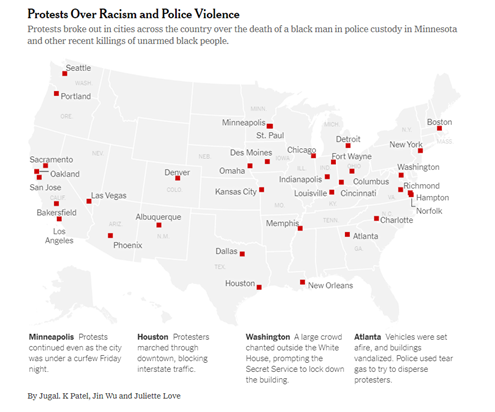
The country, which had been suffering under decades of economic mismanagement and rising inequality, reached a fever pitch under the physical and mental stress of the pandemic, the associated shutdown, and its economic devastation. The country was (and still is) a tinder box. This was the spark that lit it on fire, in many cases, literally. Since May 25, 2020, the day George Floyd was wantonly murdered by the Minneapolis Police, there have been protests.

These protests often started out peacefully but, towards evening, would erupt into violence, as a combustible mix of opportunists, anarchists, implementing a modern version of propaganda of the deed, and/or Antifa (a violence-prone, left-wing anti-fascist group) and/or white supremacists (violent right-wing groups) looted, vandalized and terrorized the city, damaging many minority-owned businesses in the process.

Starting Friday, May 29, 2020, the city of Minneapolis was put under curfew from 8PM until 6AM, with violations being a misdemeanor punishable by up to 90 days in jail or a $1,000 fine. On the first night of the curfew, the violence had not really abated. (Images of the protests can be found here.)

The absurdity of the autopsy report is just more proof (as if we needed it) that the problem of systemic racism in our country is not simply about the police department but also a failure of our entire system of “justice.” It is an insult to our intelligence and a disgrace to our country. As Petri wrote, “[I]t is always at the moment that their knee is descending on a human neck, or their bullet is flying toward a man, or they have him in a chokehold, when this human being’s own system decides to turn against him. It is a horrible curse.”

George Floyd to the System Reforming Itself?

The key question is: can the system reform itself, to paraphrase Cornell West, who thinks it cannot. It is understandable why he would think so. It is understandable why the people, particularly younger people, who have been completely failed by the country, its supposed leaders and its institutions, would have no faith in any system within the country being capable of self-reformation.

In fact, despite everything in the news, the protests across the country for which the incident in Minneapolis was the catalyst, the following video was posted on Twitter today.

The justifiably angry driver says to the cop, “Dad a criminal?” Nope. “Dad a thug?” Nope. “Dad shot dead by a cop made a mistake cuz you want to come with your gun drawn.” In other words, even with protests exploding across the country in response to police brutality, as the man explains, the cop came to the car with his gun drawn over the driver not using a turn signal.

We are all too exhausted and emotionally drained to do more than try to process our pain, frustration and anger. It is hard to not feel a deep sense of despair and hopelessness about the state of our country right now. We must keep fighting though, and we have our faith to give us strength. Our deepest condolences to George Floyd’s friends and family. He was known to us, and he will be deeply missed. Fellow Americans, we say this with love – Jesus’s way – the way of peace – is the only way.

Reality Bites 2x for 2 Gens: Gen X & Y

Gen X
Photo: Eric Nopanen on Unsplash

Let us retreat briefly to, by comparison, Generation X’s halcyon days of latchkey, Prozac, grunge and a general, somewhat melodramatic, malaise. Compared to their prime working years, the ages of 25 to 54, Gen X’s childhood and young adulthood seem rather romantic in retrospect.

Their parents sucked up to corporate management, with big hair to match big heads, eager to ascend the corporate ladder and stroke their egos along the way. Their children, now in broken homes, had to fend for themselves. Television became their best friends, maybe Mario Brothers, and there were the occasional bike rides with friends to the local candy store. Summers were spent outdoors, avoiding dysfunctional adults as much as possible.

Cutoffs for Gen X and Gen Y

The cutoffs for generations are not hard and fast, but for this purpose, Generation X were people born between the years of 1965 and 1980, and Millennials were born between 1981 and 1995. Placing the financial crisis in the year 2008, the oldest Gen Xers have or will turn 55-years-old this year, which means they turned 25 in 1990 and 43 in 2008. The youngest Gen Xers have or will turn 40-years-old, which means they turned 25 in 2005 and 28 in 2008. By comparison, the oldest Millennials have or will turn 39-years-old, which means they turned 25 in 2006 and 27 in 2008. The youngest Millennials have or will turn 25-years-old this year, the start of their prime working years.

Younger Gen X and Older Gen Y Hit Hard

As one can see by the breakdown, the generation that was the most affected in terms of prime working years by both the financial crisis and the present coronavirus crisis is Generation X. In fact, it is the most negatively impacted generation in other respects also. Both Gen Xers’ and Millennials’ parents are typically Boomers.

However, as the Boomers’ wealth increased over time, Millennials generally had more resources available to them than their Gen X siblings or counterparts. This gave Millennials a financial advantage as well as a social advantage, as the divorce rate stabilized, and their single mothers who had entered the workforce were better able to manage both work and family.

The resentment that these two generations, Generation X and Millennials, feel toward the Boomers is not just about the fact that the Boomers have effectively directed available resources for their benefit as described here, it is also that crises are, obviously, intensely destabilizing and damaging, particularly for those for whom it overlaps with their prime working years. Generation X and Millennials are the only two generations that have had their prime working years impacted by two crises. These crises also occurred in relatively short succession, a little over a decade apart.

It is quite different to try to weather a crisis after establishing a career than while entering the workforce or while still in the early part of one’s career. The younger Gen Xers and the older Millennials were still relatively young when the financial crisis hit, and they bore the brunt of the damage in terms of their careers. In fact, many younger Millennials might not have been nearly as impacted as older Millennials since many of them were still in school. The youngest Millennials were 13-years-old at the time of the financial crisis.

Gen X and Y – Resentment and Request

Although the Boomer generation has been a catastrophic failure, there is something rather simple that they could do that would help their children, if they care at all about them. They could retire. (We understand that there are some Boomers who sincerely cannot afford to retire at the standard age.) Many Boomers, however, remain in the workforce out of greed, power, and ego. Perhaps some Boomers think the world cannot manage without their genius and expertise, but we assure you, it can. We can quite reasonably argue that it might actually thrive again.

More generally, the Boomers’ “leadership” is entirely unwelcomed by younger generations at this point. Their generation’s management of the country has been an abysmal failure. Under their watch, there has been a deterioration in every aspect of American life: family, faith, work, the economy, societal bonds, political stability and on and on. And there have been two catastrophic crises.

The Boomers need to retire and allow other generations to lead and to fill their often coveted positions. We will do a better job than they did because there is nowhere to go but up. Our society is guaranteed to improve. So, Boomers, you have damaged our country and our careers enough. If your egos can possibly manage it, please retire. Trust us – we got this.