


The Tradition of the #Trending

#trending
Photo: Allie Smith on Unsplash

Innovation without truth is, well, without truth. It is instead a mere gimmick and, as such, fails to register in history’s ruthless separation of the wheat from the chaff. At best, it might resurface in a lackluster version of its once equally misguided former self. Speaking of which, there is a new #trend as younger people try to satisfy their need to believe in something aside from themselves, as their parents have often taught them, or to cope with the inevitable anxieties that are part of life.

They grope in the religious marketplace for something not quite so “established” and “normative” as Christianity, something, well, cooler. As if they are searching for the perfect countercultural outfit or posture, they might decide that being a witch or perhaps just a pagan seems cool. As a young child dressing like its parent, it reprises the hippie dippie chic without whatever modicum of imagination it once held.

This is a free country, as it should be, and we are all free to exercise our right to practice the beliefs we would like. However, let us also be honest in saying that all belief systems are not made alike. Returning to a pre-Christian pagan era is not simply idolatrous from a Christian perspective, it is valueless from any perspective, as it literally has no associated definitive values.

Although it is true that Christianity is the most popular religion in the world, perhaps its appeal is because it is appealing. It is reasonably argued that it is successful because it was and will always be the most authentically countercultural set of beliefs in the world. After all, we worship a poor man from Galilee who was crucified on a cross for preaching about truth, love and compassion.

Christianity does now fall into the category of “organized religions,” but perhaps that is also a testament to its past success and a necessity for its future success. After all, it is pretty hard to manage the spiritual lives of and other services for over 2 billion people and growing without organization or structure.

So, maybe a confirmation picture complete with crooked teeth or a bike-grease stained first communion dress is not cool, even embarrassing, but then what is cool without a certain amount of conformity-induced humiliation. So, on second thought, maybe it is cool, but it is just not #trending.  

Also see Douthat’s (2019) remarks on the (overstated) #trend – https://www.nytimes.com/2019/10/29/opinion/american-christianity.html

>>https://longinglogos.com/necessity-for-christian-witness-secular-society/<<
The Necessity for Christian Witness in Secular Society

Christian witness
Photo: Iam Os on Unsplash

As the western world became more secular, commencing with the Enlightenment, which has since developed into the perverse idolization of science, western society has also become more reliant on government to provide the basic needs that were once met by the church. Hospitals and education as we know it were inventions of the church. However, the weaknesses of a dependence on government to meet these needs have become exposed. First, let’s consider the differences in their inceptions.

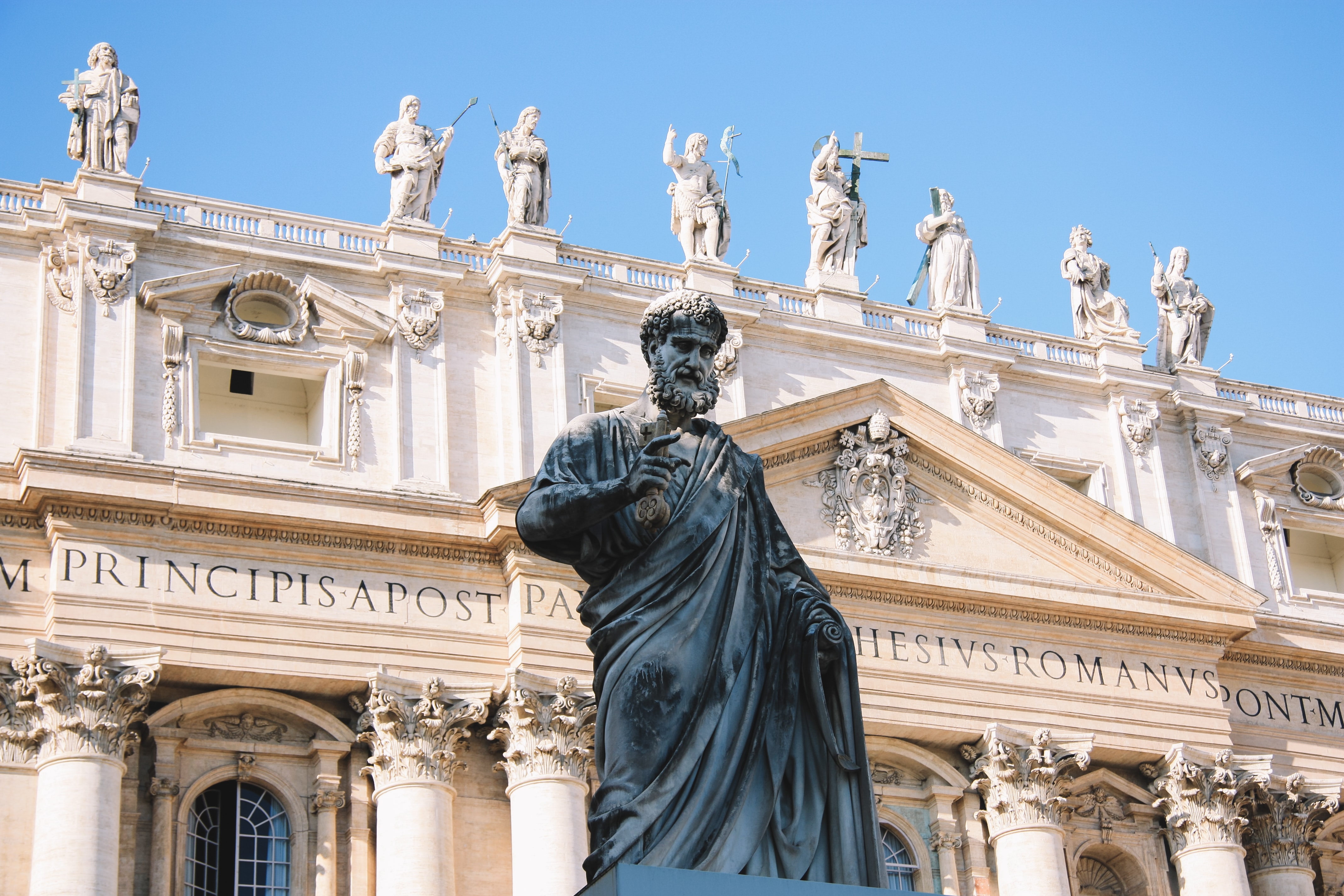
Jesus renamed Simon, a poor, uneducated fisherman, as Peter (rock) and told him that on this rock he would build his church, one that has since grown from a small Jewish sect to over 2 billion people worldwide, the largest, most diverse body in the world. The foundation of the church is Jesus’s timeless, universal teachings.

The foundation of a secular society is neither timeless nor universal. The American Constitution although remarkably well-reasoned and advanced for its time was the product of elites, who indirectly referenced the Christian conception of the person, children of God with all of its inherent dignities, yet tempered this theological understanding with pragmatic worldly considerations of good governance, which they determined required a republic, in other words, similar to the classical conception of democracy, led by well-educated, well-heeled men.

Jesus had no such considerations. Jesus’s choice of Peter had nothing to do with education, power, money or pragmatism, but with his love for and devotion to him. Despite his failings, Peter seemed to intuitively, meaning by grace, understand Jesus and his message, and it was his understanding that earned him this privileged position. Men of this world are not trying to understand divine lessons, but the world they live in and see. Peter could understand a different world, not his one, but the one that could be, the heaven on earth that could be realized if only humans were to consistently and completely apply Jesus’s teachings.   

This fundamental difference in origin continues to manifest in our secular world. The primary motivations for Christians who provide these services is still to live out Jesus’s calling, which is based on love and compassion. The state’s or the private sector’s provision of the same services is mainly motivated by money. Thus, its success is dependent not on one’s conscience or bearing honest Christian witness, i.e. laws written by God, but on laws written by men. Any failures in the law or in their administration could result in problems with the provision of these services, as we have seen time and again, for example, in our public education and health care systems.

Therefore, the sole dependence on the state for these services is as dangerous and precarious as the nation itself. If a corrupt, depraved person rises to power, the people will be at the mercy of a failed state with no corrective measures since the constitution and the laws would simply be changed to facilitate the exploitation or subjugation of the people.

Although both church and state are vulnerable to corruption, unlike the state, the corrective measure in the church is indelible and immutable since it is the foundation of the church itself, Jesus’s teachings. The enforcement of the church’s corrective measure is its believers who would force the church to return to the correct application of the teachings. The church’s role in society was incomparably important, and it needs to remain so, as it provides an irreplaceable source of stability and goodness for the world.

CT, Quick to Listen (2020): https://www.christianitytoday.com/ct/2020/march-web-only/contagious-diseases-compassion-public-health-hospitals-hist.html

>>https://longinglogos.com/the-tradition-of-the-trending/<<