

Songs of Trust Spoken by Children

Children
Photo: Mateus Campos Felipe on Unsplash

Our children, meaning all of the children on this planet, are our future and our light. Many children around the world are suffering because man can be evil. Adults are betraying our little angels. As we move through Holy Week, one that is particularly emotionally intense, let us try to be more like the most holy among us; let us cherish their innocent grace and emulate their natural resilience; let us live up to the trust they place in us.

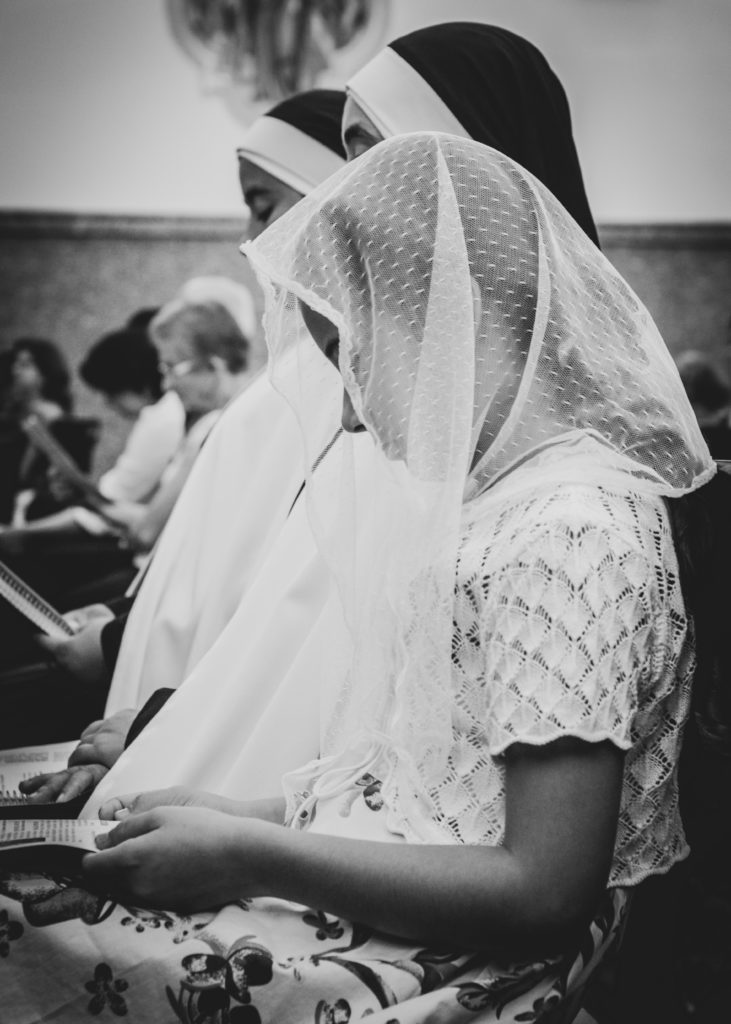
Psalm 23 from the Hebrew Bible has been translated, reworked and interpreted numerous times. The words bring comfort to the reader not necessarily because of the language or the structure of the psalm but because of what it declares – trust in God. A simple message that transcends the song and the original context. Better than a harp, a child’s voice can elevate the psalmist’s trust with its delicate musicality.

“The Lord is my shepherd, I lack nothing. He makes me lie down in green pastures, he leads me beside quiet waters, he refreshes my soul. He guides me along the right paths for his name’s sake. Even though I walk through the darkest valley, I will fear no evil, for you are with me; your rod and your staff, they comfort me. You prepare a table before me in the presence of my enemies. You anoint my head with oil; my cup overflows. Surely your goodness and love will follow me all the days of my life, and I will dwell in the house of the Lord forever.”

Losing Trust

However, David, the psalmist, became sinful and fell from grace. He lost trust; he betrayed God. Like Adam and Eve, he did not dwell in the house of the Lord forever. Societies from time immemorial have feared the gods, which they often regarded as petulant and easily provoked. Contrary to some opinions, the Christian God is not fickle. We are fickle, and Jesus knew this.

John 2:23-25 “Now while he [Jesus] was in Jerusalem at the Passover Festival, many people saw the signs he was performing and believed in his name. But Jesus would not entrust himself to them, for he knew all people. He did not need any testimony about mankind, for he knew what was in each person.”

Become Like Children

We are called to love God unconditionally and to follow the Way, and if we do so, we will have no fear and no want. God will not betray us. Instead, we sin over and over again. We do not follow God’s commandments. Additionally, we expect and condition our love, mainly on matters related to our earthly existence. Who are we to expect anything of God? God is God, and we are but mere sinful mortals. Jesus taught us complete trust and love, and we have reminders of him everywhere in our children, in God’s children.

Matthew 18:2-4 “He [Jesus] called a little child to him, and placed the child among them. And he said: ‘Truly I tell you, unless you change and become like little children, you will never enter the kingdom of heaven. Therefore, whoever takes the lowly position of this child is the greatest in the kingdom of heaven.’”

Becoming like a child is not to abandon the reason, knowledge or wisdom we might have gained over the years, but it is to render our spirit open and accepting to the Lord. It is to give without asking, to pray without expecting, to love without conditioning. It is to be God’s child again.  

As Easter approaches, let us pray for peace and remember that we have a responsibility to our children, the innocents, to protect and to love them because they belong to God. No matter where we may dwell, they still dwell in his house.

https://www.opendoorsusa.org/christian-persecution/stories/extremists-killed-her-mother-but-hearing-this-young-girl-read-psalm-23-inspires-hope

A Great Awakening: ESG Investing Edition?

ESG
Photo: Yuval Levy on Unsplash

This post is part of a broader subject that very much deserves public attention and discussion. Capitalism as it has been practiced since 1776, the year Adam Smith first published his book The Wealth of Nations, coincidentally, the same year as our Declaration of Independence, is failing. It is time to accept this fact and create something different – something better.

Moral capitalism is a term and concept that has been bandied around for a while, and its full realization in all aspects of our economy, including financial markets, is long overdue. A shift to one aspect of moral capitalism has been happening to a certain extent in, of all places, the investment community, driven mainly by the demands of institutional investors.

ESG Investing

Faith-based institutions have played a considerable role in the advancement of Environmental, Social, (Corporate) Governance (ESG) investing, also known as sustainable investing, since they are particularly sensitive to the companies or industries included in their portfolios. For example, with Pope Francis’s release of the environmentally oriented encyclical Laudato Si, the Catholic Church would do well by putting words to action and decarbonizing all of its portfolios.

Although ESG investing has been gaining steam, asset managers, traditional and alternative, have been too slow in truly implementing it. Partly, this is due to a lack of data, although the EU is now leading the data collection effort, but it is also due to the managers’ lack of foresight, knowledge, skill and genuine commitment to sustainable investing.

Some investment managers have their regular funds and similar ESG funds that exclude the companies and industries that would not meet the UN PRI or the manager’s ESG criteria. This could be acceptable in the interim, until the investment community as a whole fully transitions to ESG investing, as long as managers are not simply repurposing an old fund with an ESG label and engaging in “green washing.” (Note, the institutional investors have gotten wise and can tell.) The managers need to change their underlying investment processes and, ideally, their entire culture to a responsible, long-term investment focus.  

The hedge fund industry, active managers with higher fees and often a focus on absolute returns, would be wise to adopt ESG investing, since it would be a real value added, particularly as the industry needs to justify its raison d’être in a time of passive investment.

Also, a good hedge fund manager, like a traditional one, minimizes exposure to systemic risks and acts as a shield against what is often mislabeled as a black swan event. It would be hard to categorize the effects of climate change, which has been documented for at least half a century, as a black swan event.

In fact, the financial crisis was often referred to as such, when truly savvy investors saw it coming. If one was looking at the economy, the proliferation of certain financial instruments, the data, and the historical frequency with which crises have beset capitalist economies, it was hardly a black swan event.

Some might argue that many institutional investors need alpha/pure performance and any potentially “compromising” considerations, such as ESG, should be secondary at best. The premise of this argument would be that alpha and ESG are at odds. Let us consider. If all of the alpha generated over some extended period of time is wiped out as the “black swan” takes over the lagoon, then all those fees paid were effectively a waste of good money, particularly when pensions funds cannot afford to lose any money.

Additionally, the governance factor is low-hanging fruit. There has been inadequate pressure by institutional investors on management and on corporate oversight to lower executive compensation, improve the treatment and compensation of labor, include other stakeholders, such as labor, on the board of directors and to the minimize the short-term focus, including share buybacks, i.e. quarterly capitalism. I would argue that the mismanagement of these companies is often directly related to the investors’ underwhelming returns.

Nonetheless, the ESG trend is positive. Let us keep it moving forward and fix our economy so that it serves everyone. That would be moral capitalism, and that would be a great awakening.

Eternal Truths: Grief, Death and the Cross

Grief
Photo: Priscilla du Preez on Unsplash

I won’t pretend to speak about grief with any real knowledge, as I have never experienced it on a deeply personal level. However, I find Good Friday the saddest time in the liturgical calendar and, for me, it best approximates a feeling of grief. Like the rest of us, I know how the story ends, it ends joyfully with Jesus’s resurrection on Easter Sunday, yet it is so moving and hard every time.

Harrell writes, “the manger is not the central symbol of our faith. The empty tomb isn’t either. Christians decided early on that the sign of their faith would be a cross.” He goes on to say, “We hang on to our crosses, even at Easter, because it is in the hard places of life where Christ’s presence with us proves most holy.”

Grief and the Passion

I agree, but I think that Christians chose the cross to symbolize them and the faith because the crucifixion is the most selfless aspect of Jesus’s life. It is an incomparable sacrifice, and if you have the courage to engage with the Passion fully, it can bring you to your knees, maybe to the ground completely.

During Catholic masses on Good Friday, priests will lie prostrate before the altar, above which often hangs a cross or a crucifix. Just to watch that act of devotion and humility can bring one to tears. Theirs is a gesture of grateful submission that invokes Jesus’s gracefully submission to God the Father’s will.

This is also why Christians around the world literally walk Jesus’s path, the Stations of the Cross, year after year. They want to remember his pain and suffering, his divine grace, his love and compassion at the most difficult moment of his life, at his death.

To remember Jesus’s beauty in death is also a way of vicariously engaging with our suffering and our mortality. When death calls us, will we respond with bitterness, resentfulness, anger, fear, or depression? Or will Jesus’s steps to his Father remind us that we can bear the momentary weight of the cross because each step ultimately brings us closer to another life, one free of everything that burdens us in this one.       

Grief and the Coronavirus Pandemic

The coronavirus pandemic has not fundamentally changed death’s calculus, as it is always and forever a possibility. Really, what has changed is our awareness of the possibility of death or serious illness and our daily lives. As a thought-exercise, imagine if the probability of death were always at a relatively heightened level, as it is now. Imagine that it were even higher, such as during the Bubonic plague.

If this were “the new normal,” would we alter our lives permanently? Constantly hiding in our homes, practicing social distancing, or would we just resign ourselves to a lower life expectancy and a higher likelihood of death, and simply change psychologically or spiritually instead? Would we make peace with death?

If it is the latter, what would the shape of the peace be? Would it take the shape of the cross? Ultimately, the death that awaits us is unlikely to be anywhere near as hard as Jesus’s. And for many people around the world, they might view death as easier than their present lives.

For all of us, Jesus’s life and death is a source of comfort. In our darkest moments, we can find him there, or we can choose to go to him. To kneel in a quiet church, alone, staring up at the cross with his dead, tortured body hanging from it, and in our gratitude and submission, we can escape everything else because, ultimately, nothing else really matters.

I have no standard words of comfort to offer those in fear of death or those in grief, no angels or other well-meaning but essentially hallow allusions. I have only the truth, Jesus’s truth, and I hope that in his divine truth, one can find the shape of peace. It is the shape that Christians everywhere wear with pride, strength and full knowledge that the way, the truth and the life leads one out of this world and into the next.